
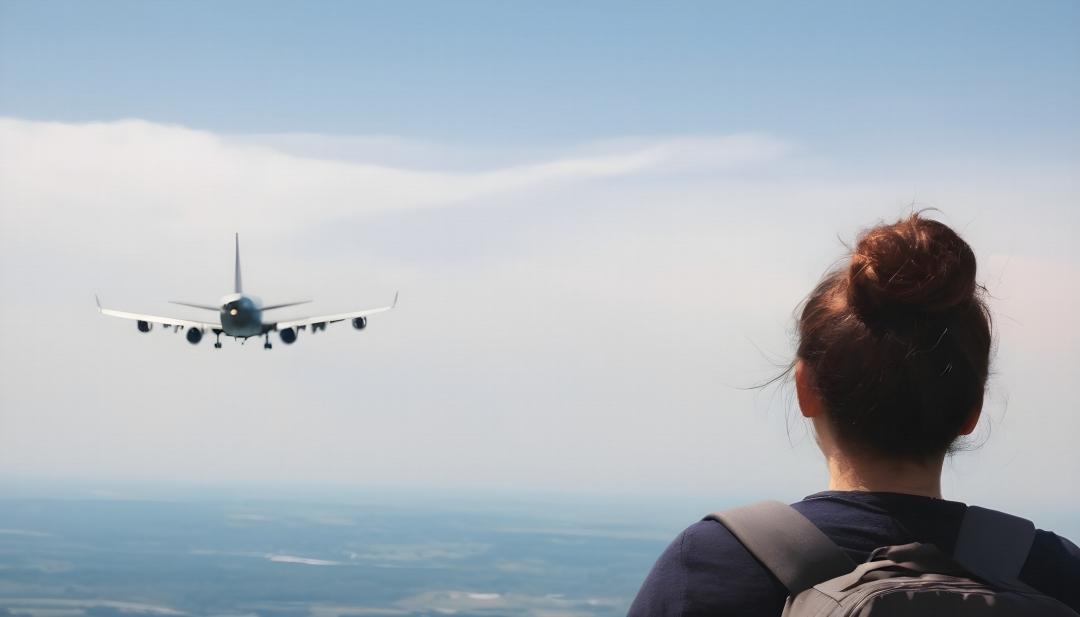
For years I could not understand why my father always found excuses whenever a family trip was proposed. He is someone who loves to watch travel documentaries and is fascinated by beautiful travel destinations. But whenever traveling is likely to materialise, he panics. He takes work as an excuse or at times, his face turns blank. Well, if we proceed with the plans, he will surely not accompany us. So, why am I talking about my father’s reaction to traveling? What seems to appear banal can be a reaction of concern. For years, talking about anxiety or any stress-related problem has been marginalised. Many anxiety-related terms have become common only a few years back. People like my father often could not express themselves and we could not understand that actually, he is suffering from pre-travel anxiety. If traveling is so fun, why do people get anxious before traveling?
There are numerous reasons (logical or illogical, conscious or unconscious) behind pre-travel anxiety. As someone who has embarked on travel blogging, I believe it is crucial to talk more about this phenomenon and to offer help to those who dream to travel, but who mentally need a boost to embrace their dreams. Even in the travel industry, mental health should be prioritised!
WHY is someone experiencing pre-travel anxiety?
Marie Casey Olseth, a psychiatrist from Minneapolis explains pre-travel anxiety as follows, “It’s not a specific phobia, such as a fear of flying or fear of driving, although these phobias can contribute to the anxiety felt by someone with pre-trip anxiety.” [The Washington Post , 2018]
A phobia would be an extreme irrational fear, but pre-travel anxiety is not being described as a phobia. Instead, it would be connected to anticipation. That anticipation could be related to uncertainties. For instance, following the COVID-19 pandemic, many people have developed a fear of traveling – fearing to catch any virus or to be sick in a foreign land. Someone who has recently watched movies about plane crashes may be afraid to take the plane due to gory images playing in his mind. Or it could be simply because someone has never stepped out of his country or neighbourhood and just the thought of being far from home may trigger anxious reactions.

- WHY is the person experiencing pre-travel anxiety?
- WHAT are the symptoms?
- HOW to help a person suffering from pre-travel anxiety?
Note that pre-travel anxiety is not necessarily experienced only by people who are traveling for the first time. Pre-travel anxiety can also be experienced in the following cases:
- Traveling alone for the first time.
- Traveling very far from home (such as in cases where you have to do a 20-hour trip
from home). - Traveling for your studies.
- Traveling for a new job.
- Settling down in a country with a cultural landscape that is very different from your
home country.
There may be many more reasons! For some people, a possible language barrier during a trip can be stressful. Imagine not being fluent in a common language like English and struggling to communicate during a trip. Fortunately, you can use some apps to decrease these barriers such as Google Translate and DuoLingo.
WHAT are the symptoms?
“Travel involves being willing to expose yourself to new situations and to be able to tolerate some uncertainty because you don’t know exactly how it’s going to go.”
Even though you love and care for your dear ones, sometimes you may misinterpret their actions or reactions. I am not proud to say that when my father was finding ways to postpone our family trip (or to cancel it!), I was annoyed because he could not provide a valid reason to me. It is sad that at times what is medically termed as symptoms are signs that we often unconsciously overlook or actions/reactions that we take for granted.
- A simple symptom could be sleepless nights the moment the subject of traveling is brought in. Having a confused mind or one where uncertainty is predominant will surely affect one’s sleep. Look out for such signs. You can help that person by talking to him/her. Remember, listening is an important skill if you want to help someone. Do not impose your views but acknowledge that the fear or hesitation that the person is experiencing might be genuine.
- Another symptom could be an obsessive packing need or to pack days or weeks before the trip. This may (not necessarily, as some people are always proactive) be a sign of pre-travel anxiety as the person may be expressing the fear of a lack of preparation or leaving something behind. This is a sign that the person is hesitantly moving away from his/her comfort zone. If you notice such symptoms, try to comfort the person by for instance, ensuring that you are taking the responsibility of some packing or that you will be staying close to shops, shopping malls, or busy streets where you can easily buy what you have forgotten to pack.
Other possible symptoms could be loss of appetite, stomach and headaches, anger, or irritability.
HOW to help a person suffering from pre-travel anxiety?
In one of my recent posts on travel anxiety, I enumerated some ways that can be adopted by the traveler to cope better with changes and to be better prepared for his/her trip. I believe that if you engage yourself in planning your trip such as familiarizing yourself with the place you will be visiting by googling for information or watching some informative YouTube videos, you will be in a way mentally rewiring your emotions. You will decrease your anxiety with some doses of familiarity!
If you know some people who have visited the place(s) you are traveling to, talk to them. Sometimes a mere conversation can offer some sense of relief. And, you also have many groups, travel blogs and forums such as those on Tripadvisor, that can help you acquire more information on the place you are visiting.
Moreover, nowadays various apps can be downloaded or used on your phone to plan your trip, to find travel companions, or to ensure that you won’t be lost (if that is a fear triggering your anxiety!). You can check one of my posts on travel apps that can transform your trip into an stress-free one. Besides, you don’t need to be a tech-savvy to use those apps, the selected ones are user-friendly.
Now, if you are the one going through pre-travel anxiety, you may try writing which is very therapeutic. Write the things that you are scared of – make a list that you can later browse to reduce your fear and increase your familiarity with the trip, or one that you can share with a close one (friend or family member).
If you are planning a trip for a family member or close one who feels anxious before traveling, consider traveling to a place that is not far from home, or one that you have personally experienced. For instance, the person can be comforted with some positive experiences in the country you are visiting. Sharing pictures of places you have visited or narrating anecdotes might arouse the interest of the person.
Pre-Travel Anxiety [Conclusion]
As mentioned in a CDC (2022) article on mental health and travel, “Travel can worsen symptoms in people with existing mental illness.” Or stress and anxiety can turn a beautiful, planned family or couple trip into a nightmare. So, identifying the WHY, WHAT, and HOW is important if you want to understand and help people who get anxious before traveling.
I hope that this post will complement knowledge and advice on mental health and traveling.
About The Guest Post
As you probably guessed, this is a guest post. It was written by the travel savvy wanderer, a blog I have been very much enjoying recently. If you are interested in travel related content or more posts like this one that integrate travel with other topics like mental health, do check out her blog. You will not be disappointed. And do let us know in the comments what you thought about this post!
For more guest posts click here.
If you enjoyed this post don’t forget to like, follow, share and comment!
Enjoyed this post? Then follow me on social media:
YouTube Twitter Instagram Pinterest LinkedIn
Email me on(guest posts welcome!): insomniacwithanaccent@gmail.com


Leave a Reply